- 01274 971310
- contact.dermadaysaesthetics@gmail.com
- Mon - Sat: Appointment Only

What is Cryotherapy?
Cryotherapy is the use of extreme cold to freeze and remove abnormal tissue
With simple benign lesions and blemishes no longer being treated by the NHS, a Cryopen treatment at Dermadays Aesthetics is the answer.
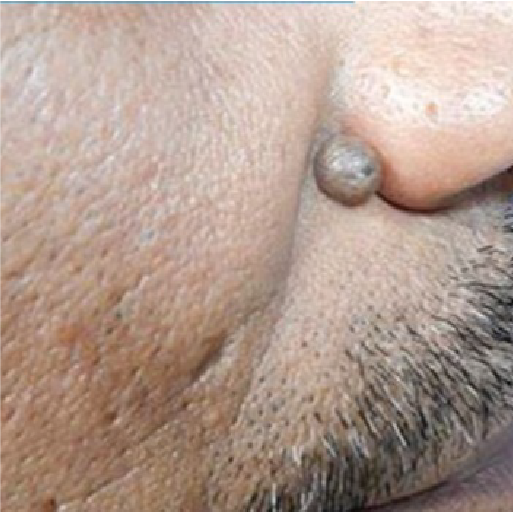
An ice cold blast from the CryoPen removes blemishes such as skin tags, cherry Angioma, Pigmentation, Verrucae and Warts.
Is it safe?
The device destroys the tissue by freezing the intracellular fluid, forming ice shards and crystals which rupture the membrane, thereby destroying the cell. That means there will be no collateral damage to healthy tissue as its incredibly accurate and precise to the treatment area.

CryoPen
𝐏𝐞𝐫𝐦𝐚𝐧𝐞𝐧𝐭, 𝐰𝐨𝐮𝐧𝐝𝐥𝐞𝐬𝐬 𝐚𝐧𝐝 𝐯𝐢𝐫𝐭𝐮𝐚𝐥𝐥𝐲 𝐩𝐚𝐢𝐧𝐥𝐞𝐬𝐬 𝐬𝐤𝐢𝐧 𝐥𝐞𝐬𝐢𝐨𝐧 𝐫𝐞𝐦𝐨𝐯𝐚𝐥 𝐮𝐬𝐢𝐧𝐠 𝐂𝐫𝐲𝐨𝐭𝐡𝐞𝐫𝐚𝐩𝐲
The CryoPen removes blemishes and benign lesions effectively and accurately using a fine jet of super cold gas under pressure
How does it work?
The Cryopen uses disposable cartridges of liquefied Nitrous Oxide to deliver quick, effective Cryotherapy treatments to benign skin lesions. The nitrous oxide destroys the skin’s tissue by freezing the intercellular fluid which forms ice shards and crystals that rupture the cells’ membranes, destroying the cells.
CryoPen delivers Nitrous Oxide directly onto the lesion and not the healthy surrounding tissue. Thus it can safely treat lesions on the face and around the delicate eye area. With a penetration rate of 1mm per 5 seconds and the ability to penetrate to a depth of 5mm, the pen provides fast and effective treatments.
Areas of treatment include:
Cherry Angioma
A cherry angioma is a bright red or purple spot on your skin that’s made up of blood vessels. These spots often appear on the torso, but they can develop anywhere, including the arms, legs, chest, and even the scalp.
Cherry angiomas are commonly round to oval-shaped. They can be smooth and flat, or they can develop as a raised bump on the skin. It’s also possible for a cherry angioma to start out small and flat and grow into a larger bump.
Pigmentation
Hyperpigmentation is the name that healthcare professionals give to patches of skin that become darker than surrounding areas of skin.
Types of hyperpigmentation include age spots, melasma, and post-inflammatory hyperpigmentation.
Hyperpigmentation occurs when the skin produces more melanin, the pigment that gives skin its color. This can make spots or patches of skin appear darker than surrounding areas.
Hyperpigmentation is a common skin condition. It affects people of all skin types
Skin Tags
Skin tags are harmless, benign growths that seem to pop up in the most inconvenient areas of your body, such as your neck, armpits, and eyelids. Although they’re not usually cause for alarm, they may bother you for cosmetic reasons or because of discomfort, especially if they easily rub on clothing or jewellery.
Often suspended on a slender stalk, these smooth, soft, skin-coloured skin lesions are frequently found on the neck, armpits, around the groin, under the breasts and on eyelids, and consist of loose collagen (protein) fibres and blood vessels surrounded by skin.
They can vary in colour and size from a few millimetres up to 5 cm (about 2 in) wide, and unlike, say, warts, are non-contagious.
Verrucae
A verruca is a wart on the sole of your foot which can be painful when you’re standing or walking. Verrucas (verrucae) are also known as planter warts.
A verruca is caused by the human papillomavirus (HPV). There are numerous strains of the virus but verrucas are only caused by HPV types 1, 2, 4, 27 and 57. The viral infection affects the epithelial cells in the skin of the foot, making them over-grow and thicken, causing small rough lumps known as papules.
Verrucas are also known as plantar warts as they develop on the plantar surface of the foot, commonly known as the sole.
Warts
Warts are skin growths that appear on areas of the skin and body that are infected with a virus in the human papillomavirus (HPV) family of viruses. There are more than 100 different HPV types. Verruca is the medical term for a warts. The main symptom of human papillomavirus infection is that it triggers excessive growth of skin cells. This makes affected areas appear thickened, hard, and rough. Some types of warts are flat and smooth. You can get warts on any part of your body, but they commonly appear on the hands and feet.
Milia
Milia are commonly found on the skin of people of all ages. They are formed when keratin (a substance produced by the skin) becomes entrapped beneath the outer layer of the skin, forming a tiny cyst. An individual milium (the singular of milia) is formed at the base of a hair follicle or sweat gland.
Milia can be categorized as either primary or secondary. Primary milia are formed directly from entrapped keratin and are usually found on the faces of infants and adults. Secondary milia are also tiny cysts and look similar, but these develop after something clogs the ducts leading to the skin surface, such as after an injury, burn, or blistering of the skin.
Benefits Include
- Pinpoint accuracy: treats lesions from 1mm to 10mm in size
- Safely treats lesions on face and close to the eyes
- No downtime or risk of scarring
- Painless treatment with no anaesthetic required
- Effective: treats the lesion without affecting the healthy surrounding tissue, which means no follow up care is needed
- Fast treatments: treats 2mm lesions in 10 seconds
Safety & side effects
CryoPen therapy has been established to be very safe. However, the following side effects may occur:
- Mild stinging following the procedure, which usually settles after a few hours.
- Sores and blisters – Can rarely form where the skin lesion was treated. Often a scab will form in the following days and fall off thereafter. This is common where deep freezing is used.
- Both hyperpigmentation (darkening of the skin) and hypopigmentation (lightening of the skin) may occur temporarily after cryotherapy. Both generally last for a maximum of a few months. Pigment change is more common in darker skin types.
Cryotherapy offers a permanent removal for most skin lesions. Some lesions may be harder to remove than others. In more delicate places eg the eye area, a shorter freeze time with a repeat procedure may be required to get a safe final result whilst ensuring little damage to the surrounding skin. A deeper lesion eg a verruca or a wart may take several treatments to get good results
Costs
It is very difficult to state a fixed price as it will depend on the size, depth, quantity and area of the skin lesion being treated.
Prices typically start from £60 with discounted prices being available for multiple lesions/areas.